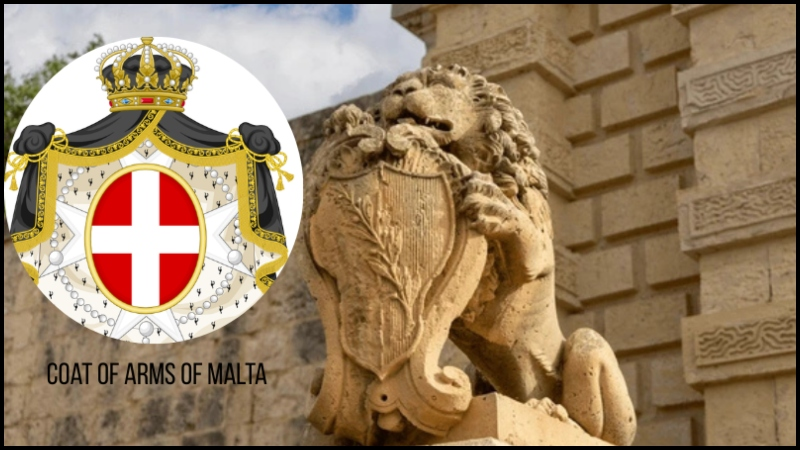
At first glance, the Coat of Arms of Malta looks simple. A shield. A crown. Two branches. But behind this quiet design hides a story of war, courage, and survival. This emblem does not just represent a country. It protects a legacy. Every color and symbol carries meaning. Every detail speaks of sacrifice and pride.
Many people see it on official papers and government buildings, yet few know its true power. Why does a small island nation carry such a strong symbol? What secrets does it hold? In this article, we uncover the real story behind the Coat of Arms of Malta and reveal the meaning most people never notice.
The Official Identity of a Proud Nation
The Malta Coat of Arms serves as the official emblem of the Republic. It appears on passports, legal documents, and state buildings. The current design was adopted in 1988. Leaders wanted a symbol that reflected both history and independence. The shield shows the national flag of Malta. It displays two vertical colors: white and red.
In the top left corner sits the George Cross. Above the shield stands a golden mural crown. This crown represents fortified cities and strong defense. Below the shield, two branches cross each other. On one side is olive. On the other side is a palm. A ribbon ties them together with the word “Malta.”
This design may look simple, but each element holds deep national meaning.
The George Cross: A Rare Honor
The most powerful feature on the shield is the George Cross. This is not just decoration. It is a mark of bravery. In 1942, during World War II, Malta suffered heavy bombing. The island stood alone under constant attack. Food was scarce. Buildings fell. Yet the people never surrendered.
Because of this courage, King George VI awarded Malta the George Cross. It is one of the highest civilian honors in the British system. Very few nations hold this award. The cross remains on the Maltese flag and Coat of Arms as a permanent reminder of strength under pressure. It tells the world a simple message: Malta does not break.
The Meaning Behind the Colors and Crown
The red and white colors date back centuries. Many historians link them to the Knights of St. John, who ruled Malta from 1530 to 1798. These knights defended Europe from Ottoman invasions. Their legacy shaped Malta’s identity. The mural crown above the shield carries five towers. This design symbolizes city walls and protection. It shows Malta’s role as a fortress in the Mediterranean Sea. The island’s location made it a key military base for centuries.
The olive branch stands for peace. The palm branch stands for victory and honor. Together, they balance strength with hope. Malta values peace but remains ready to defend its freedom.
A Symbol That Changed Over Time
Malta’s Coat of Arms did not always look this way. Before independence in 1964, the island used British-style emblems. After becoming a republic in 1974, Malta introduced new designs. Some versions included ships and agricultural tools. In 1988, leaders finalized the current emblem.
They removed complex elements and chose clarity instead. This decision made the symbol stronger. It also improved recognition worldwide. Today, the Coat of Arms reflects Malta’s modern identity while honoring its past. This evolution proves something important. National symbols grow with the people they represent.
Why the Coat of Arms Still Matters Today?
In a digital world, symbols move fast. Logos change often. Trends fade. Yet Malta keeps its emblem unchanged. Why? Because it tells a story no trend can replace. The Coat of Arms builds trust. It appears on official government websites and international agreements. This confirms authenticity.
It protects national authority. For citizens, it builds pride. For visitors, it sparks curiosity. Small nations often struggle to stand out. Malta does not. Its emblem speaks clearly. It says, “We are small, but we are strong.” This message connects past generations with the present.
Key Facts You Should Know
Here are some powerful facts about the Coat of Arms of Malta:
- Officially adopted in 1988
- Features the George Cross awarded in 1942
- Includes symbols of peace and victory
- Represents Malta as a fortified island nation
- Used on passports, state seals, and government buildings
These facts may seem simple, but together they build a powerful national story.
Final Words: More Than Just a National Emblem
The Coat of Arms of Malta is not just art. It is memory. This is courage. It is identity. Every line carries history. Every color holds sacrifice. When you see this emblem, you see the spirit of a nation that survived war, invasion, and hardship. Malta may be small on the map, but its symbol stands tall in meaning.
The George Cross reminds the world of bravery. The crown shows strength. The branches promise peace and honor. Now, when you look at the Coat of Arms of Malta, you will not see a simple shield. You will see a story of survival and pride that continues to inspire a nation today.
For more information or suggestions, please contact us.