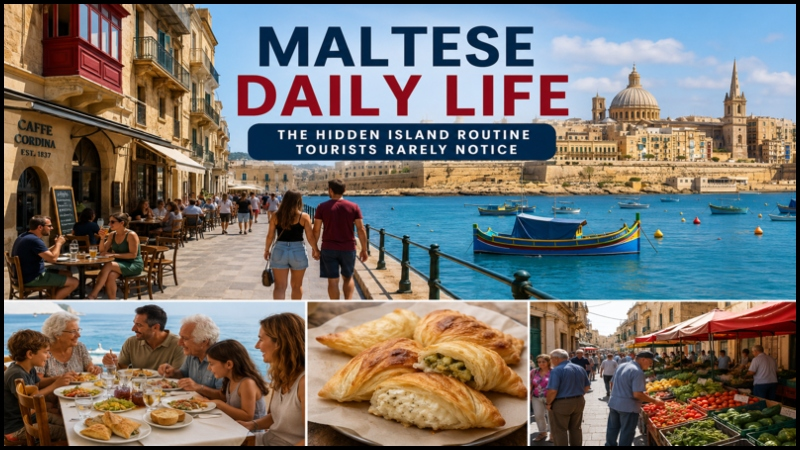
Sunlight touches the narrow streets. Church bells echo through old towns. The smell of fresh bread drifts from tiny bakeries before sunrise. At first glance, Malta looks like a simple holiday island. Yet behind the beaches and luxury yachts, another world quietly moves every day. Maltese daily life mixes deep tradition with modern energy in a way many travelers never expect. Families still gather for long dinners, neighbors still know each other by name, and evenings often end beside the sea.
This hidden rhythm makes Malta different from many European countries. Once you discover how locals truly live, the island begins to feel less like a tourist destination and more like a living story.
The Real Morning Routine in Maltese Daily Life
Mornings in Malta start earlier than many people expect. Local bakeries open before sunrise, and workers quickly fill cafés for strong coffee and fresh pastizzi. These flaky pastries remain one of the island’s favorite snacks. Streets stay calm in small villages, but cities such as Valletta and Sliema become busy fast. Many locals walk short distances because towns sit close together.
Family also shapes the morning routine. Parents often drop children off at school before work, while older relatives help with daily tasks. Unlike large countries where people rush alone, Maltese daily life still feels connected. Even during busy mornings, neighbors stop to greet each other and exchange short conversations.
Why Family Still Controls Maltese Daily Life?
Family stands at the center of Maltese culture. This tradition shapes decisions, routines, and even weekend plans. Many young adults stay close to their parents after marriage, and grandparents often help raise children. Sunday lunch remains one of the strongest traditions on the island. Families gather for long meals filled with seafood, pasta, bread, and local dishes. Conversations can last for hours.
This habit creates strong emotional bonds that visitors often admire. Maltese daily life also places great value on celebrations. Weddings, village feasts, birthdays, and religious festivals bring entire communities together. In a world where many societies feel distant, Malta still preserves close human connections in everyday life.
The Surprising Work-Life Balance Locals Enjoy
Many outsiders think Malta survives only on tourism. In reality, locals also work in banking, gaming, shipping, education, and technology. Offices usually open early because summer temperatures rise quickly during the afternoon. Despite modern business growth, locals still protect personal time. Evenings rarely feel cold or lonely. After work, people walk near the sea, meet friends at cafés, or enjoy family dinners outdoors. This balance gives Maltese daily life a peaceful rhythm. Locals understand how to mix hard work with relaxation. Some common evening activities include:
- Walking along seaside promenades
- Meeting friends at small cafés
- Attending village festas
- Watching football with family
These simple habits create a lifestyle many visitors secretly wish they had.
Food Traditions That Make Maltese Daily Life Unique
Food tells the real story of Malta. Local meals combine Italian, Arabic, and Mediterranean influences into a rich culinary culture. Bread remains important in almost every home, and seafood appears regularly because the island sits in the middle of the Mediterranean Sea. Rabbit stew also holds a special place in traditional cooking. Locals often prefer homemade meals over expensive restaurants.
Small cafés and family kitchens keep old recipes alive across generations. Another unique detail involves slow dining. People do not always eat in a hurry. Instead, meals become social moments filled with laughter and storytelling. This tradition gives Maltese daily life a warmth that many modern cities are slowly losing today.
The Hidden Challenges Behind Malta’s Beautiful Lifestyle
Although Malta looks peaceful, locals still face modern struggles. Heavy traffic causes stress in crowded areas, especially during tourist season. Housing prices also continue to rise, making apartments expensive for younger residents. During the summer, beaches and streets can become overcrowded with visitors from around the world. Yet locals continue adapting while protecting their traditions. Many residents still choose community over isolation and simple living over constant pressure.
This mindset keeps Maltese daily life emotionally strong despite modern changes. The island may grow quickly, but its people continue to hold on to the values that matter most. That quiet strength explains why so many visitors fall in love with Malta after only one trip.
Conclusion
Maltese daily life offers more than sunny beaches and travel photos. It reveals a culture built on family, tradition, community, and balance. Every narrow street, local café, and evening gathering carries a story that tourists often miss. While the world races toward fast living, Malta still protects slower and more meaningful routines. That hidden lifestyle creates the island’s true beauty.
People who understand daily life in Malta often leave with more than memories. They leave with a new idea of what modern life could feel like. Perhaps that is the island’s greatest secret. Malta does not simply entertain visitors. It quietly teaches them how to live with connection, warmth, and purpose.