What makes Malta feel so different from other islands in Europe? The answer lies within its ancient crafts, mysterious folklore, and traditions that have endured for hundreds of years. Malta’s craft and folklore are not only part of history. They are part of everyday life on the island. Behind the peaceful streets and beautiful sea views, Malta preserves stories of giants, ghost legends, magical symbols, and handmade art that travelers rarely explore in depth.
Many tourists visit Malta for holidays, but only a few explore the traditions that truly shape the island’s identity. That is why Malta continues to attract culture lovers, artists, and historians who want to experience something authentic, emotional, and unforgettable beyond the ordinary tourist experience.
The Handmade Crafts That Turn Malta Into a Living Museum
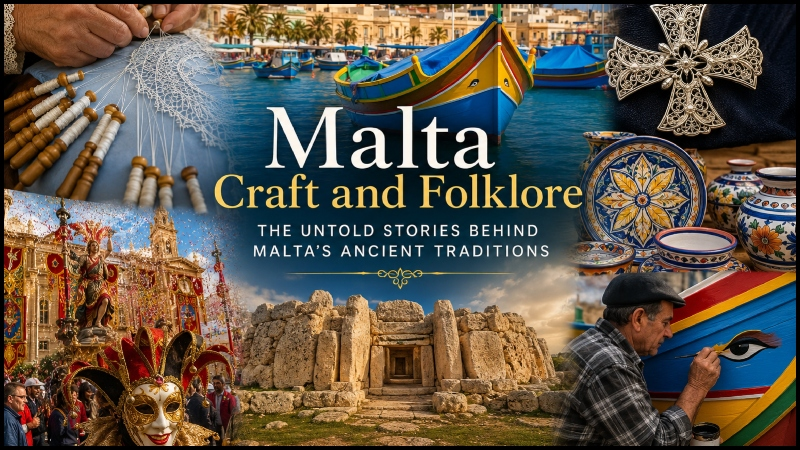
Traditional Maltese crafts carry generations of skill, patience, and cultural pride. Local artisans still create many products by hand using methods passed down through families for centuries. One of the island’s most famous crafts is Maltese lace, also called bizzilla. Women carefully weave beautiful patterns with wooden bobbins and fine cotton thread. Another admired craft is silver filigree jewelry, where artists twist tiny silver wires into delicate designs inspired by religion and nature. Maltese glass art and painted pottery also remain important parts of local culture.
Important Traditional Crafts in Malta
- Maltese Lace: Handmade decorative lace famous for detailed patterns
- Silver Filigree Jewelry: Fine silver designs shaped by hand
- Luzzu Boat Painting: Bright traditional fishing boats with symbolic eyes
- Glassblowing Art: Colorful handmade glass decorations and ornaments
- Ceramic Pottery: Mediterranean-style painted plates and pottery
These crafts represent more than beauty. They protect Malta’s cultural identity in a modern world.
The Ancient Folklore That Still Haunts Malta Today
Malta’s folklore is full of mystery, fear, wonder, and imagination. Many old stories still live strongly among local communities. One of the most famous legends explains the creation of the Ġgantija Temples on Gozo Island. According to folklore, giants built these massive stone temples because ordinary humans could never lift such enormous rocks. Another popular legend tells the story of the White Lady, a ghost believed to appear in old castles and on silent streets at night. Some locals still speak carefully about haunted places connected to this spirit. These stories may sound unreal, but they reveal how Maltese people once explained mystery, danger, and the unknown world through folklore and oral storytelling traditions.
Why do the Famous Luzzu Boats Hold Deep Cultural Meaning?
The traditional luzzu boats of Malta are much more important than most tourists realize. Their bright colors instantly attract attention in fishing villages and harbors. However, the true meaning behind these boats makes them special. Every luzzu includes painted eyes near the front. Locals believe these eyes protect fishermen from storms, bad luck, and evil spirits while traveling across dangerous waters. This belief connects Malta to ancient Mediterranean civilizations that used similar symbols for protection. Families often pass these boats down from father to son for generations, turning them into emotional family treasures rather than simple fishing tools.
Hidden Meanings Behind Luzzu Boats
- The painted eyes symbolize protection and safety
- Bright colors help boats stand out at sea
- Boat designs connect Malta with ancient Phoenician traditions
- Many fishing families still preserve the tradition proudly
These boats continue to represent Malta’s strong relationship with the sea and its ancient cultural beliefs.
Festivals, Folk Music, and Traditions That Keep Malta Alive
Malta’s culture becomes even more exciting during local festivals and celebrations. Village feasts, called festas, transform quiet streets into colorful celebrations filled with fireworks, music, food, and decorations. Traditional folk singing known as għana remains one of Malta’s oldest musical traditions. Singers perform emotional songs about love, humor, social problems, and daily life.
Sometimes, performers challenge each other through improvised singing contests that entertain large crowds. Carnival celebrations also play a major role in Maltese folklore. People wear dramatic masks and costumes while dancers and performers fill the streets with energy. These traditions endure because Maltese communities proudly protect their cultural roots rather than allowing them to disappear.
Conclusion
Malta craft and folklore reveal a world filled with creativity, mystery, tradition, and human emotion. Every handmade lace design, silver ornament, and colorful luzzu boat tells a story connected to Malta’s past. At the same time, ancient legends about giants, ghosts, and magical protection symbols continue to fascinate modern readers and travelers.
Unlike many places where traditions slowly disappear, Malta still proudly protects its cultural identity. That is what makes the island truly unforgettable. Anyone who explores Malta’s crafts and folklore not only learns history. They experience the living spirit of a culture that continues to inspire people across generations and around the world.