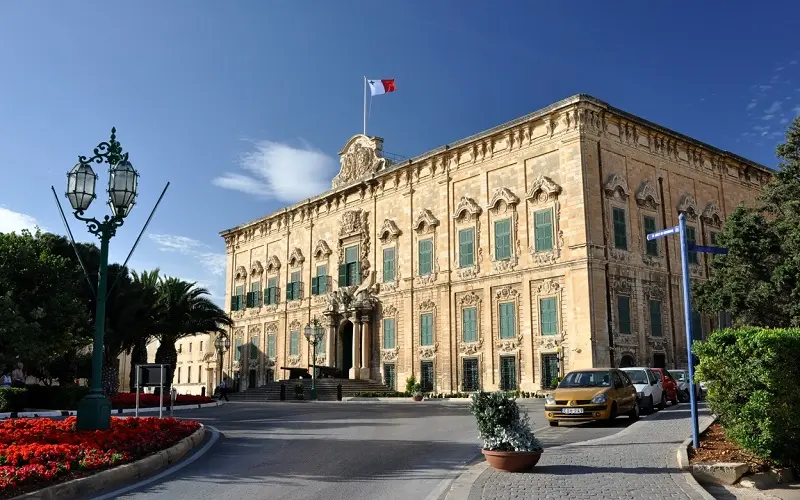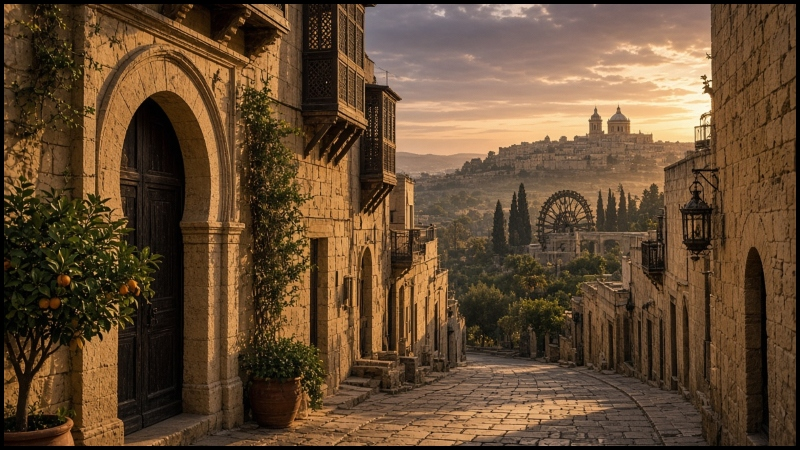
Imagine walking the quiet, winding streets of Mdina at dusk. The honey-colored stone walls close in. Shadows stretch long. You hear soft footsteps and wonder who built this maze.
Most people talk about the Knights of St. John. They call that time Malta’s golden age. But another golden age came centuries earlier. It shaped the island in ways you can still feel today. This is the story of the golden age of Moorish culture in Malta.
When the Arabs Arrived?
In 870 AD, Arab forces from North Africa and Sicily took Malta from the Byzantines. The Aghlabids led the conquest. The island became part of the Muslim world for more than two centuries. Some old records say the islands nearly emptied after the attack. People left or were taken away. Then, around 1048 or 1049, new settlers arrived. Arabic-speaking Muslims came from Sicily. They rebuilt the capital. They called it Madina. Today we know it as Mdina. These settlers brought more than weapons. They brought knowledge, tools, and a way of life.
Farming That Changed Everything
Malta is dry. Rain falls in short seasons. The Arabs fixed that problem. They introduced the water wheel. Maltese people still call it the sienja. Animals turned the wheel. Water rose from deep wells and flowed into fields. Suddenly, more land could grow food.
They planted new crops. Cotton became a major crop for centuries. Citrus trees- oranges, lemons took root. Figs and almonds spread across the hills. These plants still grow in Maltese gardens and markets today. Crop rotation helped the soil stay rich. The islands turned greener and more productive. An Arab writer of the time called Malta “rich in everything good… a blessing from God.”
A Language That Never Left
The strongest mark of the golden age of Moorish culture in Malta lives in every conversation. Maltese is the only Semitic language written in the Latin alphabet that is an official language of the European Union. Its core comes from the Arabic spoken in medieval Sicily. That dialect was close to the Arabic of Tunisia. Listen carefully. The word for God is Alla. Lent is Randan from Ramadan. House is dar. Road is triq. Numbers sound almost the same as in Arabic.
Family names tell the same story. Borg, Farrugia, Mifsud, Zammit, Fenech, and Cassar all carry Arabic roots. Place names do too. Żejtun comes from the Arabic word for olives. Għajnsielem means “spring of peace.” Marsa means harbor. Even the folk songs called għana sound like the old Arabic zajal. Singers still improvise verses in the countryside. Specialists sometimes struggle to tell the two styles apart.
Streets, Houses, and Quiet Design
Walk through Mdina or the old parts of Rabat. The streets twist and turn. They create shade on hot days. Dead-end alleys protect privacy. Courtyards sit at the heart of homes. This layout follows Arab city planning. The capital itself took its name from the Arabic word for a fortified city, madina.
Look up at some older houses. You may see a wooden balcony with lattice work. Maltese people call it a muxrabija. It comes from the Arab mashrabiya. The design lets air flow while keeping the inside private. These ideas fit the Mediterranean climate perfectly. They stayed useful long after the Arabs left.
Poetry, Trade, and Daily Life
Culture bloomed. Poets lived on the islands. Names like Abu al-Qasim ibn Ramadan and Ibn al-Susi reached the wider Muslim world. Malta sat on busy trade routes. Ships moved between Sicily, North Africa, and beyond. Ceramics from the 11th century show the links. The islands became a small but lively hub.
Muslims, and later some Christians and Jews, lived under Arab rule. The system demanded extra tax from non-Muslims, yet daily life mixed. People farmed, traded, and sang.
The End of an Era and What Remained
In 1091, Norman forces under Count Roger took control. Muslim communities stayed for a while. Culture even continued in some courts. Over the next two centuries, the picture changed. Many Muslims converted. Others left or were moved. By around 1270, almost no open Muslim community remained.
Yet the roots stayed. The language kept its Arabic skeleton. The farms kept the irrigation methods. The streets kept their winding paths. The songs kept their old melodies.
Why This Golden Age Still Matters?
Today Malta feels European and Mediterranean at once. That mix comes partly from this hidden chapter.
The golden age of Moorish culture in Malta lasted roughly from 870 to 1091. It lasted longer in influence. You hear it when a Maltese person says “kif int?” You see it in the orange trees and the silent streets of Mdina. You taste it in the almond pastries. History often celebrates the loud victories. The Knights built grand forts and cathedrals. Their story fills guidebooks. But the quieter transformation left deeper marks. Language. Food. Fields. The shape of towns.
Next time you walk those narrow lanes or hear a għana song rise in the evening air, remember the people who arrived with water wheels, citrus trees, and a new tongue. They turned a rocky island into something richer. Their golden age still lives in everyday Malta. That is the real secret the stones keep.