At first glance, they look like beautiful fishing boats painted in bright colors. But Malta traditional boats tell a much deeper story. They reflect centuries of history, culture, and life on the Mediterranean Sea. These boats are more than simple vessels. They are symbols of Maltese identity that continue to attract travelers, photographers, and history lovers from around the world.
Many visitors arrive in Malta expecting stunning beaches and historic buildings. What often surprises them are the colorful traditional boats gently floating in the island’s harbors. Their unique appearance sparks curiosity. Why are they painted this way? What do the symbols mean? And why have these boats remained important for so many generations?
The Story Behind Malta Traditional Boats
Malta sits in the center of the Mediterranean Sea. For centuries, sailors, traders, and fishermen depended on boats to survive and connect with neighboring regions. Over time, local craftsmen developed boat designs that matched the island’s needs and sea conditions.
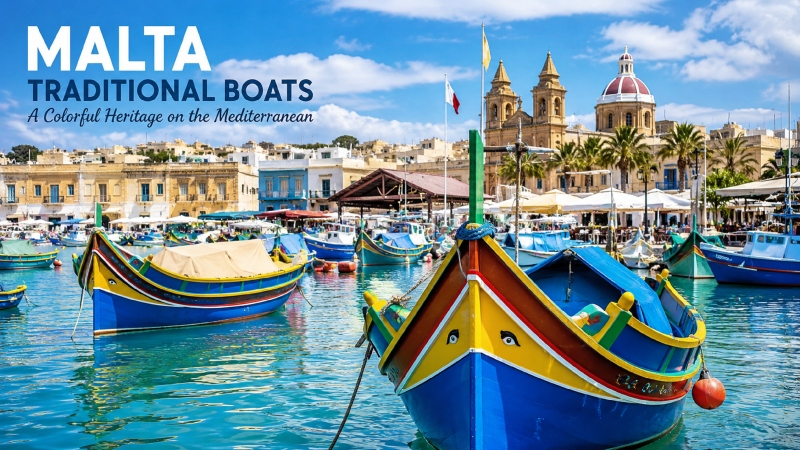
The most famous traditional Maltese boat is the Luzzu. This wooden fishing boat stands out because of its bright colors and distinctive eyes painted on the front. These eyes are often called the “Eye of Osiris.” According to local tradition, they were believed to offer protection to fishermen while at sea.
Today, the Luzzu remains one of Malta’s most recognized cultural symbols. Even people who know little about Malta often recognize these colorful boats from travel photographs.
Why Are Maltese Boats So Colorful?
One of the first things people notice about Malta traditional boats is their vibrant appearance. Blue, yellow, red, and green colors create a striking contrast against the clear Mediterranean waters.
The colors serve several purposes:
- They make boats easy to identify from a distance.
- They reflect local artistic traditions.
- They help preserve a unique cultural identity.
- They create a welcoming atmosphere in fishing villages.
These bright colors have become an important part of Malta’s visual heritage. They also make traditional harbors some of the most photographed locations in the country.
More Than Just the Famous Luzzu
Although the Luzzu receives most of the attention, Malta has other traditional boat types as well. Each one served a different purpose throughout history.
The Kajjik was commonly used for fishing and transportation. The Firilla was designed for speed and practical coastal travel. The Dghajsa, another traditional vessel, played an important role in harbor transport before modern ferries became common. These boats helped local communities thrive long before modern technology transformed maritime life.
Where Can You See Traditional Boats Today?
The best place to experience Malta traditional boats is the fishing village of Marsaxlokk. This peaceful harbor is famous for its rows of colorful Luzzus floating near the waterfront. Early mornings offer some of the best views as fishermen prepare for the day.
Visitors can also find traditional boats in several historic harbors across Malta. Many boat owners continue to maintain them with pride, ensuring that future generations can appreciate this important part of Maltese culture.
For photographers, these boats provide endless opportunities. Their colors, reflections, and historic surroundings create unforgettable images throughout the year.
Why These Boats Still Matter?
In many countries, traditional boats have disappeared as modern alternatives replaced them. Malta has managed to preserve much of its maritime heritage. This preservation keeps local traditions alive while supporting tourism and cultural education.
Traditional boats remind people of the island’s connection to the sea. They tell stories of hardworking fishermen, skilled craftsmen, and generations who built their lives around the Mediterranean.
For travelers, they offer something increasingly rare in today’s world: authenticity. They are not artificial attractions created for tourists. They are living pieces of history that continue to serve local communities.
Final Thoughts
Malta traditional boats represent far more than colorful wooden vessels. They are symbols of resilience, craftsmanship, and cultural pride. Their bright colors attract attention, but their history creates lasting admiration.
Anyone who wants to understand Malta beyond its beaches and landmarks should take time to explore these remarkable boats. They reveal a side of the island that many travelers never forget. In every harbor, they quietly tell the story of Malta’s enduring relationship with the sea.