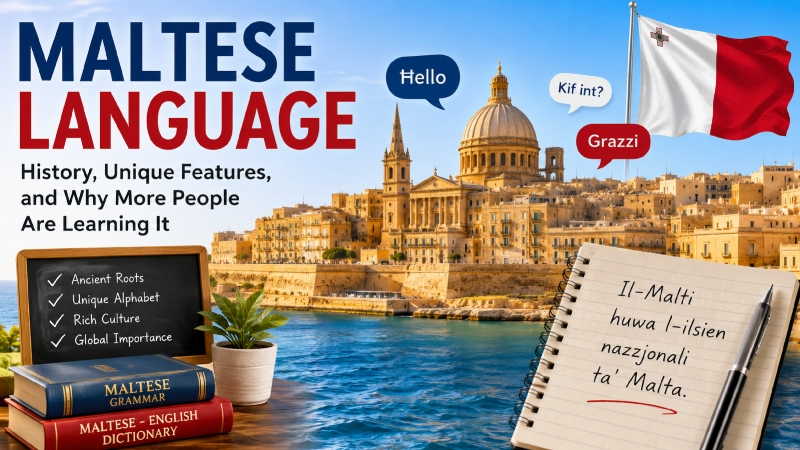
Have you ever wondered how one small island created one of the world’s most unique languages? At first glance, the Maltese language may sound familiar. Yet, the deeper you explore, the more surprising it becomes. This remarkable language blends Arabic roots with strong European influences in a way that no other official language does. It carries centuries of history, culture, and identity in every word.
Today, millions recognize it as Malta’s national language, but many still know very little about it. In this guide, you will discover fascinating facts, its rich history, unique writing system, and the growing reasons why the Maltese language continues to attract learners from around the world.
What Is the Maltese Language?
The Maltese language is the official national language of Malta and one of the official languages of the European Union. It belongs to the Semitic language family but uses the Latin alphabet instead of Arabic script. This combination makes it truly unique. Over hundreds of years, the language absorbed vocabulary from Italian, Sicilian, English, and French. Today, Maltese serves as the primary language in schools, government offices, media, and daily conversations.
Key Facts
- Official language of Malta
- Official language of the European Union
- Written with the Latin alphabet
- Strong Arabic roots
- Influenced by Italian and English
- Spoken by more than half a million people worldwide
The Fascinating History of the Maltese Language
The story of the Maltese language stretches back over one thousand years. It developed from Siculo-Arabic, which arrived in Malta during Arab rule in the 9th century. Later, European powers shaped the language by introducing thousands of new words. Italian became important during the medieval period, while English influenced modern vocabulary after British rule. Instead of replacing its identity, Maltese blended these influences into a language unlike any other. Today, it stands as a living record of Malta’s multicultural history.
Historical Milestones
- Originated from Siculo-Arabic
- Expanded through Italian influence
- Modernized with English vocabulary
- Became Malta’s national language
- Earned official EU recognition
Why Is the Maltese Language So Unique?
Many languages borrow words from others. However, the Maltese language combines completely different language families. Its grammar follows Semitic traditions, while its writing system uses Latin letters. This rare combination attracts linguists and language learners worldwide. Speakers often switch naturally between Maltese and English, creating a multilingual environment. The language also preserves ancient expressions that disappeared from many related languages centuries ago.
Unique Features
- Semitic grammar
- Latin alphabet
- Rich vocabulary from several languages
- Distinct pronunciation
- Strong cultural identity
- Official EU language status
The Maltese Alphabet and Pronunciation
Learning the Maltese alphabet feels easier than many people expect because it uses familiar Latin letters. However, several letters contain special marks that produce unique sounds. Correct pronunciation requires practice, but beginners usually improve quickly through listening and repetition. Reading becomes easier once learners understand the pronunciation rules. Native speakers appreciate learners who make an effort to pronounce words correctly.
Alphabet Highlights
- Based on Latin letters
- Includes special characters
- Simple spelling patterns
- Mostly phonetic pronunciation
- Easier reading after practice
How Many People Speak the Maltese Language?
The Maltese language has over 500,000 speakers worldwide. Most live in Malta, but large communities also exist in Australia, the United Kingdom, Canada, and the United States. Immigration helped spread the language across several continents. Although English is widely spoken in Malta, Maltese remains the heart of national identity. Families continue teaching it to younger generations, helping preserve its future.
Where It Is Spoken
- Malta
- Australia
- United Kingdom
- Canada
- United States
- Maltese communities worldwide
Is the Maltese Language Difficult to Learn?
Many beginners worry that Maltese will be difficult. In reality, the answer depends on your language background. English speakers often recognize many borrowed words, making vocabulary easier than expected. Grammar may require patience because it follows Semitic patterns. Regular practice quickly builds confidence. Listening to native speakers, reading simple texts, and speaking every day create faster progress.
Learning Tips
- Practice daily
- Learn common phrases first
- Listen to native speakers
- Read children’s books
- Build vocabulary slowly
- Speak without fear
Why Learning the Maltese Language Is Worth It?
Learning the Maltese language opens doors to Malta’s history, traditions, and local communities. Travelers enjoy deeper conversations with residents. Professionals gain an advantage in tourism, education, and international business connected to Malta. Language learners also discover a fascinating mix of cultures that shaped the Mediterranean for centuries. Every lesson brings a better understanding of Malta’s unique identity.
Benefits
- Better travel experiences
- Strong cultural understanding
- Career opportunities
- Unique language skills
- Access to local traditions
- Personal growth
The Future of the Maltese Language
Technology is giving the Maltese language a brighter future. Schools continue teaching it, while universities study and preserve its history. Social media, mobile apps, and digital learning platforms help younger generations use the language every day. Online dictionaries and translation tools make learning easier than ever before. As global interest in unique languages grows, Maltese continues attracting learners from every corner of the world.
Modern Growth
- Digital learning apps
- Online dictionaries
- Social media content
- University research
- Government support
- Growing international interest
Conclusion
The Maltese language proves that history, culture, and identity can come together in one remarkable language. Its ancient Arabic roots, European influences, and Latin alphabet make it one of the world’s most fascinating languages. Whether you plan to visit Malta, study languages, or simply explore different cultures, learning Maltese offers valuable rewards.
Every word tells a story shaped by centuries of change and tradition. As technology and education continue supporting its growth, the Maltese language remains strong and relevant for future generations. Start exploring it today, and you will discover a language that is as unique as the beautiful islands where it was born.
Frequently Asked Questions
Is Maltese an Arabic language?
Maltese belongs to the Semitic language family and developed from Siculo-Arabic, but it has strong influences from Italian and English.
Is Maltese difficult for English speakers?
It has unique grammar, but many borrowed English words make learning easier than expected.
What alphabet does Maltese use?
Maltese uses the Latin alphabet with several special letters.
Is Maltese an official EU language?
Yes. It is one of the official languages of the European Union.
Where is Maltese mainly spoken?
It is mainly spoken in Malta and by Maltese communities around the world.